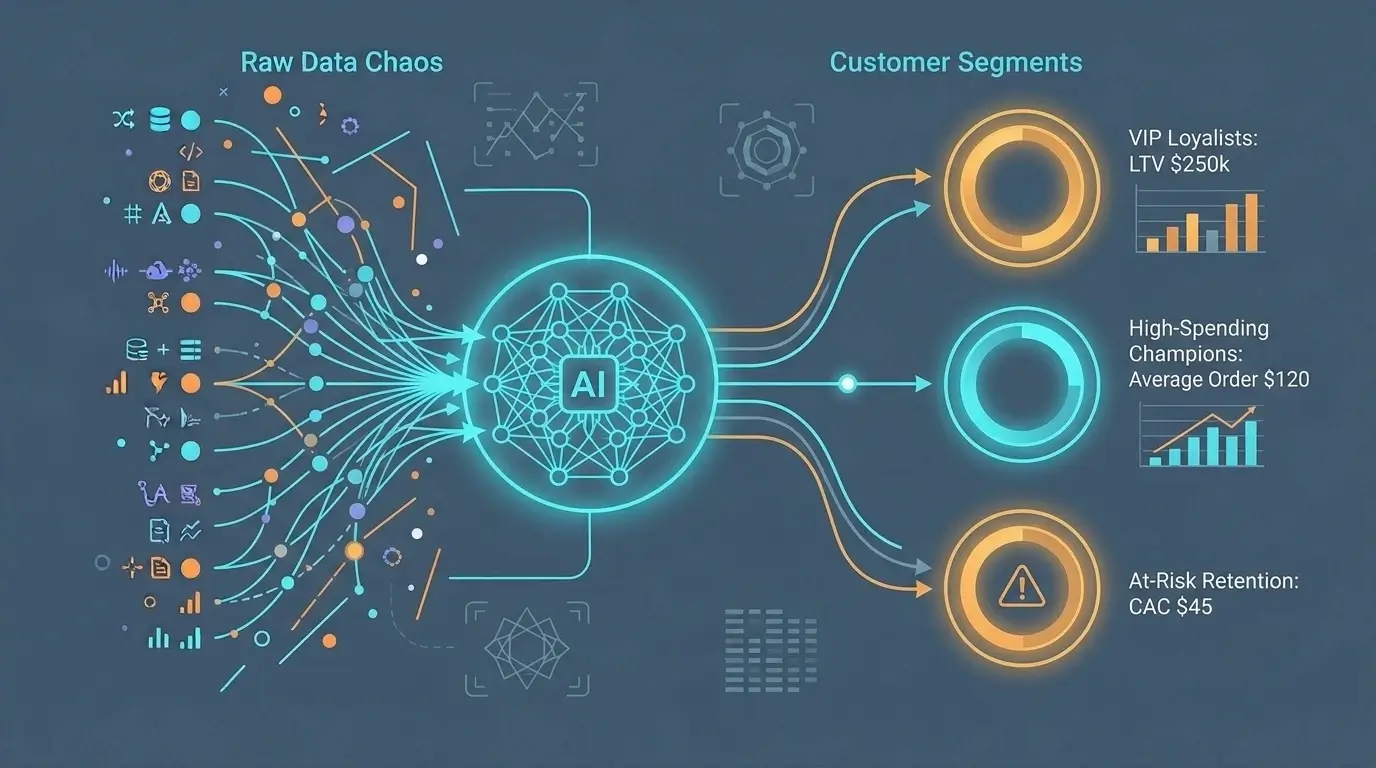
For many marketing professionals, "automation" means setting up an email sequence in HubSpot or using Zapier to connect two apps. While useful, these tools often come with limitations and recurring costs.
The real unlock for modern marketing performance measurement and efficiency isn't another SaaS tool; it's Python.
You don't need to be a full-stack engineer to leverage Python. As a data analyst specializing in digital marketing, I rely on small, focused Python scripts to handle the repetitive data tasks that consume hours of a marketer’s week.
In this guide, I will share five practical automation scripts tailored to common marketing problems—complete with concept explanations and the specific Python libraries you need.
Why Marketers Should Learn (a little) Python
Before diving into the code concepts, let’s focus on the business value:
- Eliminate Repetitive Tasks: If you are copying data from one spreadsheet to another every Monday, you can automate it.
- Access Granular Data: APIs often provide data that isn't accessible through the standard web interfaces.
- Cost Efficiency: Most Python libraries are open-source and free, reducing your dependency on expensive middleware tools.
- Advanced Analytics: Leverage machine learning for forecasting and customer segmentation that Excel simply cannot handle.
Script 1: Automating Daily GA4 Performance Reports
Instead of manually logging into Google Analytics 4 (GA4) every morning to check key metrics, you can write a script that fetches the data and emails you a clean summary.
- Problem: Manual reporting is tedious and leads to fragmented monitoring.
- Solution: A Python script that connects to the GA4 Admin API, runs a specific report (e.g., Sessions, Conversions, and Revenue by Source), and saves it to a CSV.
- Key Libraries:
google-analytics-data(the official GA4 library),pandas.
Python
Script 2: Monitoring SEO Keyword Rankings & Search Console Data
Monitoring SEO performance across thousands of keywords is nearly impossible without automation.
- Problem: Identifying quick SEO wins or sudden drops requires massive data lookup.
- Solution: A script that pulls your Google Search Console (GSC) data via API, filters keywords with high impressions but low click-through rates (CTR) (positions 8–12), and highlights pages with declining rankings.
- Key Libraries:
google-api-python-client(for GSC API),pandas.
Script 3: Scraping Competitor Pricing or Content Updates
Keeping tabs on your competitors' pricing or new product launches is critical but time-consuming.
- Problem: Competitors update their websites frequently, and manual monitoring is reactive.
- Solution: A basic web scraper that runs scheduled checks on competitor pricing pages and identifies any changes in the HTML text (e.g., detecting if a '$49/mo' tag becomes '$39/mo').
- Key Libraries:
beautifulsoup4,requests,schedule.
Script 4: Automating Looker Studio Data Blending (Python -> SQL -> Looker)
Looker Studio’s internal data blending feature often fails on large datasets or complex joins. A more robust solution is to use Python to process the data first.
- Problem: Looker Studio dashboards become slow and error-prone when blending multiple sources (e.g., Meta Ads + Google Ads + GA4).
- Solution: A script that extracts data from all ad platforms, cleans the columns, unions the datasets using
pandas, and pushes the finalized "Master Marketing Table" into a SQL database (like BigQuery or PostgreSQL). Looker Studio then connects to the SQL table directly, maximizing speed. - Key Libraries:
pandas,sqlalchemy(to connect to databases), specific API libraries (facebook-business,google-ads).
Script 5: AI-Powered Customer Sentiment Analysis of Reviews
Understanding customer feedback across thousands of reviews (Amazon, G2, Trustpilot) requires more than manual reading.
- Problem: Manually categorizing reviews as positive, neutral, or negative is subjective and inefficient.
- Solution: Feed your review data (scraped via Script 3 or imported from CRM) into a Python script utilizing pre-trained AI models. The model automatically scores the sentiment of every review, allowing you to quickly visualize sentiment trends over time.
- Key Libraries:
transformers(huggingface),pandas,nltk.
Conclusion: How to Start Automating
The hurdle isn't learning Python completely; it’s learning how to install a library and run a script someone else has structured.
If you are a student or professional looking to break into data-driven marketing, mastering these automation basics will immediately differentiate you from analysts who only know how to build dashboards.
My advice: Pick the most tedious data task you currently handle manually and start there. The hours you save will pay dividends.
Are you looking to implement automated reporting or AI-driven segmentation in your organization? Stay tuned for deep-dives on deploying these scripts in production environments.